
How to Choose Motor Oil in Cary, NC
By • November 4, 2026

Motor oil is the fluid that lubricates, cools, cleans, and protects your engine’s moving parts. Choosing the correct oil means following your vehicle manufacturer’s viscosity and performance specifications, then changing it at the recommended interval. For Cary drivers, proper motor oil helps maintain reliable performance through traffic, heat, and changing road conditions.
What Does Motor Oil Do for Your Engine?
Motor oil does much more than make engine components slippery. It creates a protective film between moving metal parts, reducing friction and limiting wear. It also carries heat away from internal components and helps suspend dirt, carbon, and other contaminants until the oil filter can capture them.
Fresh oil supports several essential engine functions:
- Lubricates pistons, bearings, camshafts, and other moving parts
- Helps control engine temperature by carrying heat away
- Reduces corrosion and rust caused by moisture and combustion byproducts
- Holds contaminants in suspension so they can be removed through filtration
- Supports fuel efficiency and smooth engine performance
As motor oil ages, heat and pressure break down its protective properties. Contaminants can accumulate, and the oil may become less effective at reaching critical components. That is why routine oil service is one of the most important forms of preventive car maintenance.
How Do You Choose the Right Motor Oil?
The best motor oil for your vehicle is the grade and type listed in the owner’s manual. Using a different product simply because it is cheaper, thicker, or marketed for another vehicle can affect lubrication and engine performance.
Check these specifications before buying oil:
- Viscosity: This describes how easily oil flows at different temperatures. Common examples include 0W-20, 5W-20, and 5W-30.
- Performance rating: Look for the service category and approvals required by your vehicle manufacturer.
- Oil type: Your vehicle may require conventional, synthetic blend, or full synthetic oil.
- Capacity: The engine needs a specific amount of oil. Too little or too much can cause problems.
- Vehicle age and condition: High-mileage formulas may help older vehicles with certain seal or consumption concerns.
The first number in a viscosity grade describes cold-weather flow, while the second describes viscosity at operating temperature. Lower numbers generally flow more easily when cold. However, a lower number is not automatically better. Always follow the manufacturer’s recommendation.
Synthetic vs. Conventional Oil: Which Is Better?
Full synthetic motor oil is engineered to provide consistent performance across a wider range of temperatures. It often resists oxidation, sludge, and breakdown better than conventional oil. Many newer vehicles require synthetic oil because their engines operate under tighter tolerances or higher temperatures.
Conventional oil can still be appropriate for some older vehicles and certain driving conditions. Synthetic blend oil offers a middle option, combining some synthetic components with conventional oil.
Consider synthetic oil when:
- Your owner’s manual requires it
- You frequently drive in heavy traffic or extreme temperatures
- Your vehicle has a turbocharged engine
- You take many short trips that prevent the engine from fully warming up
- You want longer-lasting protection between scheduled services
The right choice depends on your vehicle, driving habits, and manufacturer requirements, not just the price on the shelf. A technician can verify the correct oil before service.
How Often Should You Change Motor Oil?
Most vehicles need an oil change according to a mileage or time interval, but the exact schedule varies. Modern vehicles may go longer between services than older models, especially when using full synthetic oil. The owner’s manual and maintenance reminder are the best starting points.
Your vehicle may need more frequent oil changes if you:
- Drive mostly short distances
- Spend significant time idling or in stop-and-go traffic
- Tow trailers or carry heavy loads
- Drive on dusty, unpaved roads
- Operate in very hot or very cold conditions
- Have an older engine that consumes or leaks oil
Cary traffic can create demanding conditions even when mileage remains low. Frequent trips through congested areas, repeated acceleration, and extended idling place additional heat and stress on an engine. If you are unsure about your service interval, review your maintenance records or schedule an inspection through our Appointments page.
Can You Tell When Your Car Needs an Oil Change?
A dashboard oil-life reminder is useful, but it should not be your only warning. Signs of overdue or low motor oil may include a noisy engine, a burning smell, darker oil, reduced performance, or an illuminated oil-pressure warning light.
Important distinction: an oil-pressure warning light can indicate a serious problem and is not simply a reminder to schedule routine maintenance. If it appears while driving, safely stop the vehicle and seek professional assistance. Continuing to drive with low oil pressure may cause severe engine damage.
You can check the oil level at home by parking on level ground, turning off the engine, waiting several minutes, and using the dipstick according to the owner’s manual. A low reading may indicate a leak or oil consumption issue. Adding oil may be necessary temporarily, but it does not replace diagnosis or an oil change.
What Happens During an Oil Change Service?
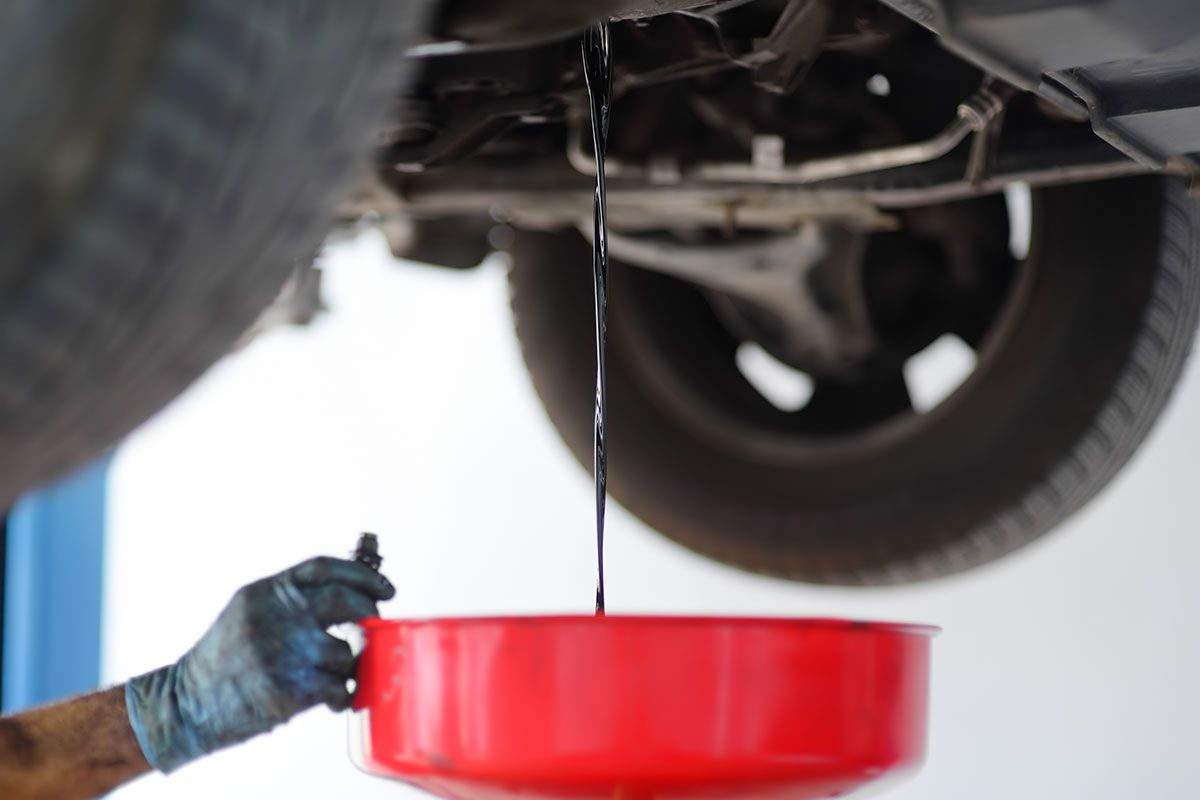
A professional oil change should be more than draining old fluid and pouring in new oil. A complete service typically includes:
- Checking the correct oil specification and engine capacity
- Draining the used motor oil safely
- Replacing the oil filter
- Installing the correct amount of new oil
- Checking for leaks around the drain plug, filter, and engine
- Verifying the oil level after the engine runs
- Resetting the maintenance reminder when appropriate
- Inspecting visible fluid levels and basic vehicle condition
Replacing the filter matters because a saturated or damaged filter can restrict flow or allow contaminants to circulate. A technician may also notice a leak, worn belt, damaged component, or warning sign during the inspection.
At Cary Car Care, our family-owned team focuses on clear communication, fair value, and dependable automotive service. We use professional equipment and follow the vehicle’s specifications rather than recommending a one-size-fits-all solution. You can learn more about our complete Services or read customer experiences on our Reviews page.
Why Is Motor Oil Important for Cary, NC Drivers?
Local driving conditions influence how hard an engine works. Cary drivers may encounter summer heat, heavy traffic, frequent errands, highway commuting, and long periods of idling. These conditions can increase engine temperature and accelerate oil degradation, especially when a vehicle is driven mostly on short trips.
Seasonal temperature changes also make the correct viscosity important. Oil must flow quickly during startup while maintaining protection after the engine reaches operating temperature. Using the grade recommended for your vehicle helps provide that balance.
Preventive maintenance is usually less expensive than repairing damage caused by neglect. Keeping records of oil changes also helps preserve resale value and makes it easier to identify changes in oil consumption or engine performance.
Motor Oil Maintenance Checklist
Use this quick checklist between service visits:
- Check the oil level at the interval recommended in your owner’s manual
- Look underneath the vehicle for fresh oil spots
- Pay attention to new engine noise, odors, or warning lights
- Keep your oil-change receipts and mileage records
- Use only the manufacturer-approved viscosity and specification
If your vehicle loses oil between changes, do not assume that adding oil solves the problem. A leak or internal engine issue should be inspected promptly.
Frequently Asked Questions About Motor Oil
Is thicker motor oil better for an older car?
Not necessarily. Older vehicles may benefit from a high-mileage formula, but thicker oil is not always the correct solution. The proper viscosity depends on the manufacturer’s specifications, climate, engine design, and mechanical condition. Ask a qualified technician before changing grades.
Can I switch from conventional to synthetic oil?
In most cases, switching between compatible conventional and synthetic products is acceptable. The important requirements are using the correct viscosity, performance rating, and capacity. A technician can confirm compatibility for your specific vehicle.
What happens if I skip an oil change?
Old oil may lose viscosity, accumulate contaminants, and provide less protection against friction and heat. Continued neglect can contribute to sludge, reduced efficiency, accelerated wear, and serious engine damage. The longer an interval is overdue, the greater the risk.
Should I change my oil if I do not drive often?
Yes. Oil can degrade over time even when mileage is low. Moisture and combustion byproducts may accumulate during short or infrequent trips. Follow the time-based interval in your maintenance schedule as well as the mileage recommendation.
How do I know which oil my car needs?
Check the owner’s manual, the oil cap, or the manufacturer’s maintenance information for the required viscosity and specification. If those resources are unclear, a professional auto repair shop can identify the correct product using your vehicle’s year, make, model, and engine.
Choose the Right Oil Change Service in Cary
Motor oil protects your engine by reducing friction, controlling heat, carrying contaminants, and supporting reliable performance. The right product is the one that matches your vehicle manufacturer’s specifications, while the right service interval depends on time, mileage, and driving conditions. Cary traffic, short trips, and hot weather can make consistent maintenance especially valuable.
Review your maintenance schedule, check your oil level, and act promptly if you notice a warning light, leak, or unusual engine noise. When you are ready for professional help, schedule an Oil Change Service through Cary Car Care . Our team can verify the correct motor oil, replace the filter, check for concerns, and help keep your vehicle dependable on Cary roads.
Latest Posts